

Mortgage pre-approval requirements have tightened as lenders respond to elevated home prices, shifting rate conditions, and a 2026 conforming loan limit landscape that places a significant share of Virginia’s most competitive markets above the $806,500 baseline. For buyers targeting properties priced at or above the $1,249,125 high-cost ceiling in Fairfax, Arlington, or Loudoun counties — or for investors pursuing DSCR and non-QM programs — understanding exactly what lenders evaluate before issuing a pre-approval letter is the difference between a winning offer and a rejected one.
This guide covers the eight core requirements lenders scrutinize in 2026, the tools and authoritative resources that help you prepare each one, and how a wholesale broker pre-approval differs structurally from what retail lenders offer. The eight tools are reviewed in priority order for Virginia jumbo, non-QM, and high-balance conforming borrowers — from the broker platform that issues a preliminary pre-approval to the federal resources that verify your eligibility on every relevant dimension.
One structural advantage is worth understanding before you begin: a soft credit pull mortgage pre-approval through a wholesale broker means no hard inquiry touches your credit file until you are ready to commit to a specific loan. Retail lenders — including Rocket Mortgage, C&F Mortgage, NFM Lending, Veterans United, and Movement Mortgage — require a hard pull before issuing any pre-approval letter. That hard inquiry reduces your FICO score at precisely the moment you need it to be as strong as possible. A mortgage pre approval without hard pull at the preliminary stage is not a workaround — it is a structural feature of the wholesale broker model, and it matters most when you are comparison shopping across multiple programs or evaluating multiple properties simultaneously.
A no hard inquiry mortgage pre approval through Supra Mortgage’s NoTouch Credit Pull gives you a complete preliminary analysis — program eligibility, rate tier, reserve requirement, and DTI picture — with no credit score impact and no commitment required. As a soft pull mortgage broker serving Virginia, Florida, Tennessee, and Georgia, Supra Mortgage provides this no credit hit mortgage application review as the standard starting point, not an exception. For context on how the two inquiry types differ and what each triggers on your credit file, see the full soft pull vs. hard pull mortgage pre-approval comparison and the soft pull mortgage review explainer.
Written by Duane Buziak, NMLS #1110647 | Coast2Coast Mortgage LLC, NMLS #376205. This content is for informational purposes only and does not constitute a loan commitment or guarantee of financing. All loan programs are subject to credit approval, underwriting, and applicable program guidelines. Loan limits and program terms are subject to change.
1. Supra Mortgage — NoTouch Credit Pull Pre-Approval
Best for: Virginia jumbo, DSCR, bank statement, and non-QM borrowers who want a preliminary pre-approval without a hard credit inquiry.
Supra Mortgage is a Virginia-based wholesale mortgage broker offering pre-approvals across jumbo, non-QM, DSCR, bank statement, and high-balance conforming programs — with a NoTouch Credit Pull that issues a preliminary pre-approval without a hard inquiry on your credit file.

Where This Tool Shines
The structural differentiator here is the NoTouch Credit Pull. Retail lenders — including Rocket Mortgage, C&F Mortgage, NFM Lending, Veterans United, and Movement Mortgage — typically require a hard pull before issuing any pre-approval letter. That hard inquiry can shave points off your FICO score at precisely the moment you need it to be as strong as possible. A mortgage pre approval without hard pull at the preliminary stage is a genuine advantage, not a marketing claim.
Beyond the credit pull mechanics, Supra Mortgage accesses over 500 wholesale lenders rather than a single retail product shelf. For a Northern Virginia buyer at $1.1M or a Richmond investor running a DSCR analysis on a rental portfolio, that breadth matters. Wholesale rate pricing is not marked up through a retail branch, which typically translates to a lower rate and fee combination on the same loan scenario.
Key Features
NoTouch Credit Pull: A soft credit pull mortgage pre-approval — no FICO impact until you choose to proceed, functioning as a true no credit hit mortgage application at the initial stage.
Wholesale Lender Access: 500+ wholesale lenders versus a single retail product shelf, enabling competitive pricing across loan types.
Program Breadth: Jumbo loans, DSCR investor loans, bank statement programs, asset depletion, and VA loans all accessible under one broker relationship.
No Hard Inquiry Mortgage Pre Approval: The preliminary pre-approval stage uses a soft pull, preserving your FICO score during early shopping and comparison.
Virginia Market Depth: Licensed in VA, FL, TN, and GA, with particular expertise in Northern Virginia jumbo transactions where high-cost conforming limits apply.
Best For
Move-up buyers in Fairfax, Arlington, and Loudoun counties targeting high-balance or jumbo loan amounts; real estate investors evaluating DSCR programs; self-employed borrowers who need bank statement or asset depletion qualifying; and any borrower who wants to shop rates as a soft pull mortgage broker engagement before committing to a hard pull.
Pricing
Broker fees are disclosed upfront. Wholesale pricing typically results in a lower rate and fee combination than retail equivalents because there is no lender markup on the rate sheet. Specific pricing depends on loan program, FICO, LTV, and market conditions at the time of application.
2. CFPB Mortgage Tools and Key Terms Glossary
Best for: Borrowers who need lender-neutral definitions of every term on a pre-approval checklist before engaging any lender.
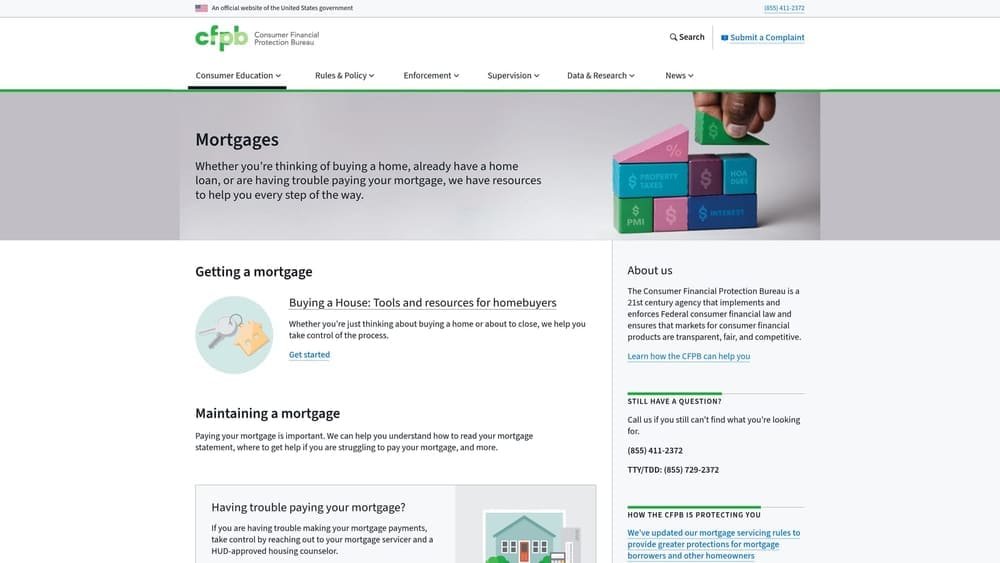
CFPB Mortgage Tools is the Consumer Financial Protection Bureau’s official mortgage resource center, providing lender-neutral definitions of DTI, LTV, PITI, qualifying income, and every other term that appears in a pre-approval conversation.
Where This Tool Shines
Most borrowers arrive at a pre-approval conversation with a working understanding of a few terms and a lot of gaps. The CFPB resource fills those gaps without a sales agenda attached. When a lender says your back-end DTI is too high or your LTV requires PMI, you should already know what that means and why it matters — not learn it under pressure during a rate lock conversation.
The resource also explains the mechanical difference between a hard pull and a soft inquiry, which is directly relevant to any borrower evaluating whether to use a no hard inquiry mortgage pre approval approach through a broker versus going directly to a retail lender. Understanding this distinction before you apply is genuinely useful.
Key Features
Government-Sourced Definitions: No lender interpretation layer — terms mean exactly what federal regulators say they mean.
DTI and Income Calculation Guidance: Explains how lenders calculate qualifying income across W-2, self-employed, and investment income scenarios.
Credit Inquiry Explainer: Covers what triggers a hard pull versus a soft inquiry — critical context for any borrower managing their FICO score during a home search.
Always Current: Federal resource updated in alignment with regulatory changes, not a third-party site with outdated content.
Best For
First-time pre-approval applicants, move-up buyers who haven’t been through the process in several years, and any borrower who wants to walk into a pre-approval conversation already fluent in the terminology lenders use.
Pricing
Free. Government resource with no registration required.
3. AnnualCreditReport.com — Free Credit File Review
Best for: Any borrower who wants to review their full credit file before a lender triggers a hard inquiry during pre-approval.
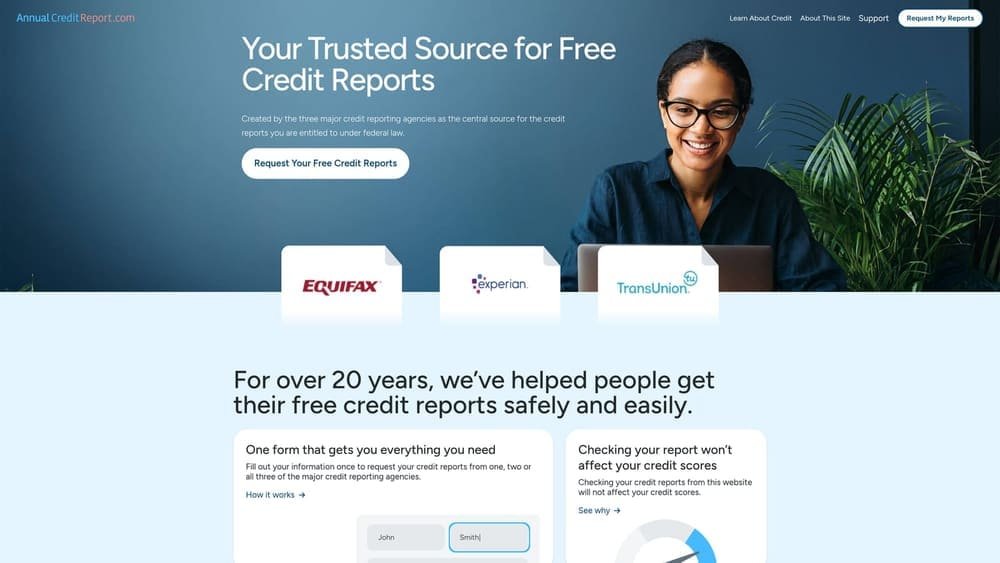
AnnualCreditReport.com is the only federally authorized source for free credit reports from all three bureaus — Equifax, Experian, and TransUnion — and reviewing your file here has no FICO score impact whatsoever.
Where This Tool Shines
The single most avoidable pre-approval complication is a derogatory item on your credit file that you didn’t know existed. Collections from a forgotten medical bill, a disputed account that never resolved, or an identity theft tradeline can derail a pre-approval or force a rate adjustment — and none of that needs to be a surprise. Pulling your own reports here before any lender sees them is the correct sequence.
This is also the appropriate step before engaging any soft pull mortgage broker process. Knowing exactly what a lender will see when they run their tri-merge credit report allows you to address discrepancies, dispute errors under the Fair Credit Reporting Act, and enter the pre-approval conversation with accurate expectations about your FICO floor across programs.
Key Features
All Three Bureau Reports: Access Equifax, Experian, and TransUnion simultaneously — the same files lenders pull during underwriting.
No FICO Impact: Reviewing your own file here is a soft inquiry and does not affect your credit score.
Error Identification: Identify collections, derogatory marks, or inaccurate tradelines before a lender sees them — giving you time to dispute under FCRA protections.
Weekly Access: Per current CFPB guidance, weekly free access is available, not just annual.
Best For
Every borrower, without exception, before initiating any mortgage pre-approval process. Particularly critical for investors, self-employed borrowers, and jumbo buyers where FICO thresholds are tighter and lender overlays more consequential.
Pricing
Free. Federally mandated under the Fair Credit Reporting Act.
4. FHFA Conforming Loan Limit Lookup Tool
Best for: Buyers who need to determine whether their purchase falls under baseline conforming, high-balance, or jumbo territory before choosing a loan program.
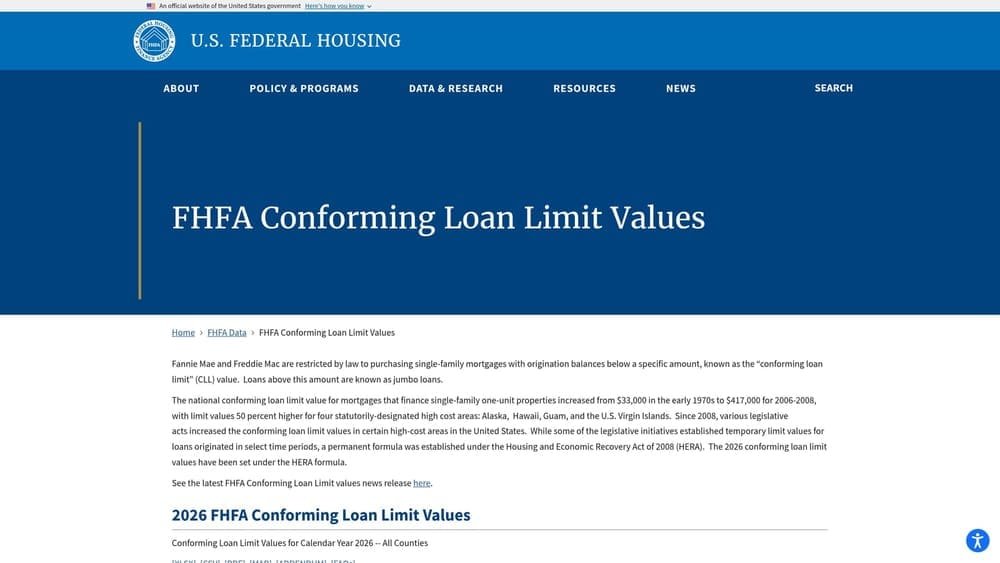
FHFA Conforming Loan Limit Lookup is the Federal Housing Finance Agency’s official county-level database — the definitive source for 2026 loan limit data, with direct relevance to how your pre-approval is structured and priced.
Where This Tool Shines
The difference between a conforming loan and a jumbo loan is not just a number — it’s a pricing tier, a reserve requirement, a FICO floor, and often a down payment threshold. Knowing exactly where your purchase price lands relative to your county’s limit before you apply determines which pre-approval conversation you’re having. For Northern Virginia buyers in Fairfax, Arlington, or Loudoun counties, the high-cost ceiling of $1,249,125 is the operative number in 2026, not the baseline $806,500.
This tool also matters for buyers near the conforming ceiling who may benefit from a loan split strategy — structuring a first and second mortgage to keep the primary loan within agency conforming limits and access better pricing. That decision starts here, with verified county-level data.
Key Features
2026 Official Limits: $806,500 baseline single-unit / $1,249,125 high-cost ceiling single-unit — verified directly from FHFA.
County-Level Lookup: Northern Virginia counties qualify for high-cost limits; confirm your specific county before structuring a loan.
Program Determination: Establishes whether you need jumbo pricing or can access agency conforming programs with their more favorable rate and reserve structures.
Loan Split Planning: Critical for buyers near the conforming ceiling who may optimize pricing by staying within agency limits.
Best For
Move-up buyers in high-cost Virginia markets, investors evaluating purchase price thresholds, and any borrower whose loan amount falls within $100,000 of either the baseline or high-cost conforming ceiling.
Pricing
Free. Federal government resource.
5. IRS Get Transcript
Best for: Self-employed borrowers, investors, and anyone whose income documentation will be scrutinized at the 4506-C verification stage of underwriting.
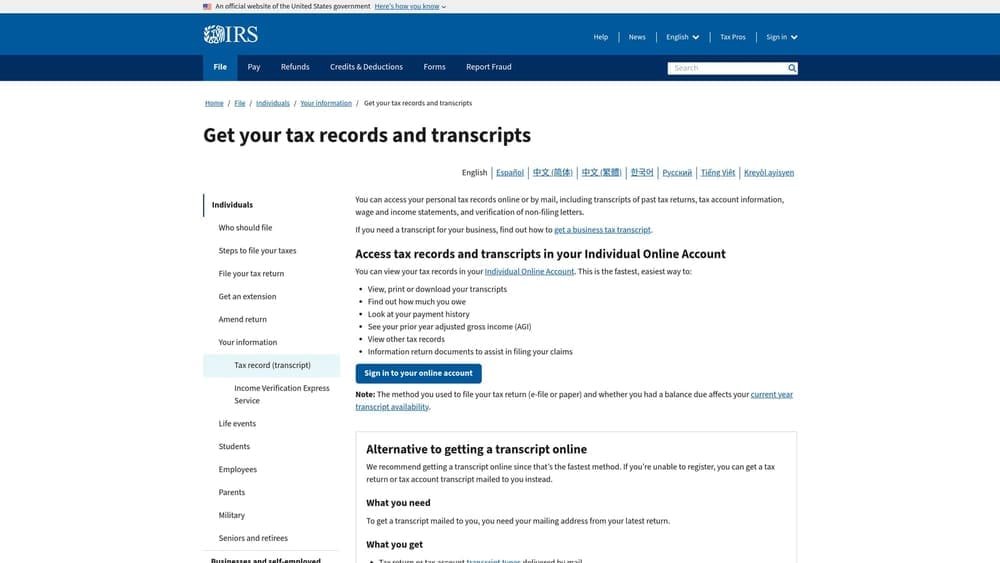
IRS Get Transcript is the IRS’s official online portal for retrieving your own tax transcripts — the same documents lenders request via Form 4506-C during mortgage underwriting.
Where This Tool Shines
One of the most common underwriting delays occurs when a lender submits a 4506-C request and the transcript they receive does not match the tax returns the borrower provided. Amended returns, late filings, or transcription errors create discrepancies that can pause a loan at the worst possible moment. Pulling your own transcripts before you apply allows you to identify those discrepancies on your timeline, not the underwriter’s.
For bank statement loan borrowers and asset depletion candidates, this step is equally important. Even if your qualifying income comes from a non-traditional documentation path, lenders typically still verify that reported income on tax returns is consistent with the overall financial picture. Knowing what your transcripts show — before a lender sees them — is straightforward risk management.
Key Features
Instant Online Access: Tax return transcripts (1040, W-2, business returns) available immediately through the secure IRS portal.
4506-C Equivalent: Matches exactly what lenders receive when they submit their own verification request during underwriting.
Discrepancy Identification: Allows self-employed borrowers to catch and address inconsistencies before underwriting surfaces them.
No Third-Party Required: Direct from IRS — no paid service or intermediary needed.
Best For
Self-employed borrowers, real estate investors with complex returns, anyone who has filed an amended return in the past two years, and bank statement loan applicants who want to verify their full income picture before engaging a lender.
Pricing
Free. Direct IRS resource.
6. Fannie Mae Single-Family Mortgage Eligibility Resources
Best for: Move-up buyers and brokers who want to verify conventional conforming program eligibility directly from the source — no lender interpretation layer.
Fannie Mae Single-Family Mortgage Products is the official originating and underwriting resource center where borrowers and brokers can verify program eligibility, review guideline summaries, and understand exactly what Fannie-backed conventional loans require at the pre-approval stage.
Where This Tool Shines
When a lender tells you that your DTI is too high for a conventional loan, or that your reserves are insufficient, the question worth asking is: according to whose guidelines? Fannie Mae’s published standards are the actual underwriting framework for conventional conforming loans — and reading them directly removes the ambiguity that retail lenders sometimes introduce through overlays and internal policy layers.
For move-up buyers evaluating whether to stay within conforming limits or step up to a jumbo program, this resource clarifies exactly where the agency guidelines draw the line on DTI, reserves, and LTV before you commit to a loan structure.
Key Features
Direct-from-Source Guidelines: Conventional conforming program requirements without lender overlay interpretation.
DTI and Reserve Clarity: Specifies the standard 45% back-end DTI ceiling and reserve requirements — with guidance on compensating factors that allow exceptions up to 50% via DU/LP approval.
LTV Rules: Clarifies minimum down payment requirements across borrower types — 3% for qualifying first-time buyers, 5% standard, and higher thresholds near the conforming ceiling.
Program Comparison Framework: Useful for evaluating whether a conforming or high-balance loan structure is optimal for a specific purchase scenario.
Best For
Move-up buyers in the $600,000–$1,249,125 purchase price range evaluating conforming versus jumbo structuring; brokers verifying program eligibility before issuing a pre-approval; and any borrower who wants to understand the actual agency standards rather than a retail lender’s summary of them.
Pricing
Free. GSE public resource.
7. CFPB Loan Estimate Explainer
Best for: Borrowers comparing pre-approval offers across lenders who need to read a Loan Estimate accurately before making a program decision.
CFPB Loan Estimate Explainer is the CFPB’s interactive guide that decodes every line of the standardized three-page disclosure lenders must provide within three business days of a pre-approval application.
Where This Tool Shines
A Loan Estimate is the most important document in any pre-approval comparison — but it is only useful if you can read it correctly. The origination charge on Page 2, the lender credits, the APR versus the interest rate, and the projected monthly payment all tell different parts of the story. Misreading any one of them leads to a comparison error that can cost thousands over the life of the loan.
This is particularly relevant when comparing a wholesale broker Loan Estimate against a retail lender’s offer. Wholesale pricing typically appears differently in the fee structure than retail pricing, and the CFPB explainer gives you the line-by-line framework to make an accurate apples-to-apples comparison without needing a broker to translate it for you.
Key Features
Line-by-Line Breakdown: Explains origination charges, lender credits, APR, and projected payments in plain language.
Lender Fees vs. Third-Party Costs: Clarifies which fees are lender-controlled and which are third-party — critical for accurate comparison shopping.
Wholesale vs. Retail Comparison Framework: Enables accurate comparison of a broker Loan Estimate against a retail lender’s offer using the same standardized document structure.
No Lender Bias: Government-sourced explanations with no sales agenda attached to any line item.
Best For
Any borrower who has received multiple pre-approval offers and needs to compare them accurately; jumbo buyers where small rate and fee differences compound significantly over a large loan balance; and investors evaluating total acquisition cost across multiple financing options.
Pricing
Free. Government resource.
8. Virginia DHCD Homeownership Resources
Best for: Virginia buyers who want state-sourced program information and market context relevant to pre-approval planning in the Commonwealth.
Virginia DHCD Homeownership Resources is the Virginia Department of Housing and Community Development’s official homeownership portal, providing Virginia-specific program information and eligibility guidance relevant to pre-approval planning.
Where This Tool Shines
Virginia has its own housing programs, market dynamics, and eligibility frameworks that interact with conventional pre-approval structures in ways that a generic national resource won’t address. The DHCD portal is the state-sourced starting point for understanding which Virginia-specific programs may be relevant to your purchase scenario and how they layer with or affect conventional pre-approval requirements.
For buyers evaluating Virginia Housing programs alongside a conventional or high-balance conforming loan, understanding the interaction between state program requirements and standard lender pre-approval criteria is important before you commit to a loan structure. This resource provides that context without a lender’s sales agenda attached.
Key Features
Virginia-Specific Program Information: State-sourced guidance on homeownership programs available in the Commonwealth.
Pre-Approval Planning Context: Useful for understanding Virginia-specific requirements that may affect how a loan is structured before application.
Virginia Housing Program Links: Connects to Virginia Housing programs that may interact with or complement conventional pre-approval pathways.
State Government Source: No lender interpretation or sales layer — direct from the Commonwealth’s housing authority.
Best For
Virginia buyers who want to understand the full landscape of state-level programs before finalizing a loan structure; move-up buyers evaluating whether any Virginia Housing programs interact with their purchase scenario; and any borrower who wants Virginia-specific context alongside national program eligibility research.
Pricing
Free. State government resource.
How the Pre-Approval Requirements Stack Up: Wholesale Broker vs. Retail Lenders
Understanding the structural differences between a wholesale broker pre-approval and a retail lender pre-approval is essential before you decide where to apply. The table below reflects factual, structural differences — not marketing claims.
| Lender / Channel | Credit Pull at Pre-Approval | Program Access | Rate Pricing | DSCR / Non-QM Available | FICO Floor (Typical) |
|---|---|---|---|---|---|
| Supra Mortgage (Wholesale Broker) | Soft pull via NoTouch Credit Pull (no FICO impact at preliminary stage) | 500+ wholesale lenders — jumbo, DSCR, bank statement, VA, conforming | Wholesale — no retail markup | Yes — multiple programs | 580–620 conforming; 680–720+ jumbo |
| Rocket Mortgage | Hard pull required | Single retail product shelf | Retail — marked up | Limited publicly offered | 620 conventional |
| C&F Mortgage | Hard pull standard | Conventional, FHA, VA — limited non-QM | Retail | Limited | 620 conventional |
| NFM Lending | Hard pull standard | Conventional and government programs | Retail/correspondent | Limited | 620 conventional |
| Veterans United | Hard pull standard | VA loan specialist — limited non-VA access | Retail | No | 620 (lender overlay) |
| Movement Mortgage | Hard pull standard | Conventional and government programs | Retail | Limited | 620 conventional |
A Worked Example: $1.1M Purchase in Fairfax County, Virginia
Here is how the pre-approval requirements translate to real numbers for a specific Virginia scenario. A buyer targeting a $1,100,000 purchase in Fairfax County in 2026 faces the following structure:
The 2026 high-cost conforming ceiling for Fairfax County is $1,249,125, per FHFA’s official county-level data. At $1,100,000, this loan falls within the high-balance conforming range — meaning the buyer may access agency pricing rather than full jumbo pricing, which is a meaningful rate advantage.
With 10% down ($110,000), the loan amount is $990,000. At a 10% down payment on a high-balance conforming loan, the lender will typically require a FICO score of 680 or higher, a back-end DTI at or below 45%, and reserves of 6–12 months PITI. On a $990,000 loan at a hypothetical 7.00% rate, PITI runs approximately $7,200–$7,800 per month depending on taxes and insurance. Twelve months of reserves at that PITI level means the borrower needs $86,400–$93,600 in documented liquid assets beyond the down payment and closing costs.
That reserve requirement alone illustrates why jumbo and high-balance borrowers benefit from working with a broker who accesses multiple wholesale lenders — reserve requirements vary by program, and finding a lender whose overlay aligns with your documented asset picture can determine whether you receive a pre-approval or not.
Frequently Asked Questions: Mortgage Pre-Approval Requirements
What is the minimum FICO score required for a conventional conforming mortgage pre-approval in 2026?
The standard minimum for conventional conforming loans is 620. Some wholesale lenders access programs with overlays as low as 580 on specific products. Jumbo programs typically require 680–720 or higher depending on LTV and loan amount.
What is a NoTouch Credit Pull and how does it differ from a standard pre-approval?
The NoTouch Credit Pull is a preliminary pre-approval process that uses a soft credit inquiry rather than a hard pull. This means your FICO score is not affected at the initial stage. It is a structural feature offered through Supra Mortgage’s wholesale broker model — retail lenders typically require a hard pull before issuing any pre-approval letter.
What is the 2026 conforming loan limit for Northern Virginia counties?
Fairfax, Arlington, and Loudoun counties qualify for the high-cost conforming ceiling of $1,249,125 for a single-unit property in 2026. The baseline conforming limit nationally is $806,500. Source: FHFA.gov.
What income documentation do self-employed borrowers need for pre-approval?
Standard documentation includes two years of personal and business tax returns. Borrowers who qualify under bank statement programs may substitute 12–24 months of bank statements. Asset depletion programs allow documented liquid assets to be divided over the loan term to establish qualifying income. The IRS Get Transcript tool allows self-employed borrowers to verify their tax transcript matches their returns before a lender runs a 4506-C.
How does DTI affect mortgage pre-approval eligibility?
Back-end DTI is the ratio of total monthly debt obligations to gross monthly income. Conventional conforming loans allow up to 45% DTI as standard, with exceptions up to 50% through automated underwriting (DU/LP) with strong compensating factors. Jumbo programs typically cap at 43–45%. DSCR investor loans do not use borrower DTI — the property’s cash flow ratio is the primary qualifier.
What is a DSCR loan and how does it affect pre-approval requirements?
A Debt Service Coverage Ratio loan qualifies the borrower based on the rental income of the investment property relative to the loan’s PITIA (principal, interest, taxes, insurance, and association dues). A DSCR of 1.0 means rental income equals the payment; most wholesale lenders require 1.0–1.25 minimum. Borrower DTI is not the primary qualifier, making DSCR programs accessible for investors with complex personal income structures.
What is the difference between a hard pull and a soft pull in a mortgage context?
A hard pull is a formal credit inquiry that appears on your credit file and can reduce your FICO score. Retail lenders typically require a hard pull before issuing a pre-approval letter. A soft pull reviews your credit data without creating a hard inquiry — no FICO impact. The CFPB provides additional context on this distinction at consumerfinance.gov. A soft credit pull mortgage pre-approval through a wholesale broker preserves your score during the comparison shopping phase.
How many months of reserves are required for a jumbo loan pre-approval?
Jumbo programs commonly require 6–12 months of PITI in documented liquid reserves. This is significantly higher than the 2–3 months standard for baseline conforming loans. High-balance conforming loans typically fall in the middle, with 6 months being a common requirement. Reserve requirements vary by lender and program, which is one reason broker access to multiple wholesale lenders is structurally advantageous for jumbo borrowers.
Virginia Market Context
Northern Virginia consistently ranks among the most competitive residential real estate markets in the Mid-Atlantic. The Virginia Association of Realtors publishes quarterly market data tracking median sale prices, days on market, and inventory levels across the Commonwealth — current reports are available at virginiarealtors.org. For buyers in Fairfax, Arlington, and Loudoun counties, where high-cost conforming limits apply, understanding the precise loan limit boundary is not academic — it directly determines your pre-approval structure, your rate tier, and your reserve requirement.
Which Pre-Approval Path Is Right for You
The right starting point depends on your loan type and income structure. Here is a quick orientation by borrower profile:
Jumbo buyer ($806,500–$2M+ in Northern Virginia): Start with the FHFA Loan Limit Tool to confirm your county’s high-cost ceiling, then engage Supra Mortgage’s NoTouch Credit Pull to assess program options across multiple wholesale lenders without a hard inquiry on your file.
Real estate investor (DSCR or non-QM): Pull your AnnualCreditReport.com file and IRS transcripts first, then work with a broker who accesses DSCR programs — retail lenders typically do not offer these. A no credit hit mortgage application at the preliminary stage is particularly valuable when you are evaluating multiple properties simultaneously.
W-2 move-up buyer: Review the Fannie Mae eligibility resources to understand where your loan amount and DTI fall relative to agency guidelines, then use the CFPB Loan Estimate Explainer to compare offers accurately once you receive them.
Self-employed borrower: IRS Get Transcript is your first step — verify your tax transcripts before any lender runs a 4506-C. Then evaluate whether a bank statement program or conventional income documentation path produces a better qualifying income figure for your scenario.
Across all four profiles, the structural advantage of a mortgage pre approval without hard pull at the preliminary stage is the same: you preserve your FICO score while gathering the information needed to make a confident program decision.
To explore pre-approval options across jumbo, DSCR, bank statement, and conforming programs without a hard inquiry on your credit file, schedule your personalized consultation today with Duane Buziak at Supra Mortgage. Reach the office directly at 804-212-8663.